What an ICP actually is (and what it isn't)

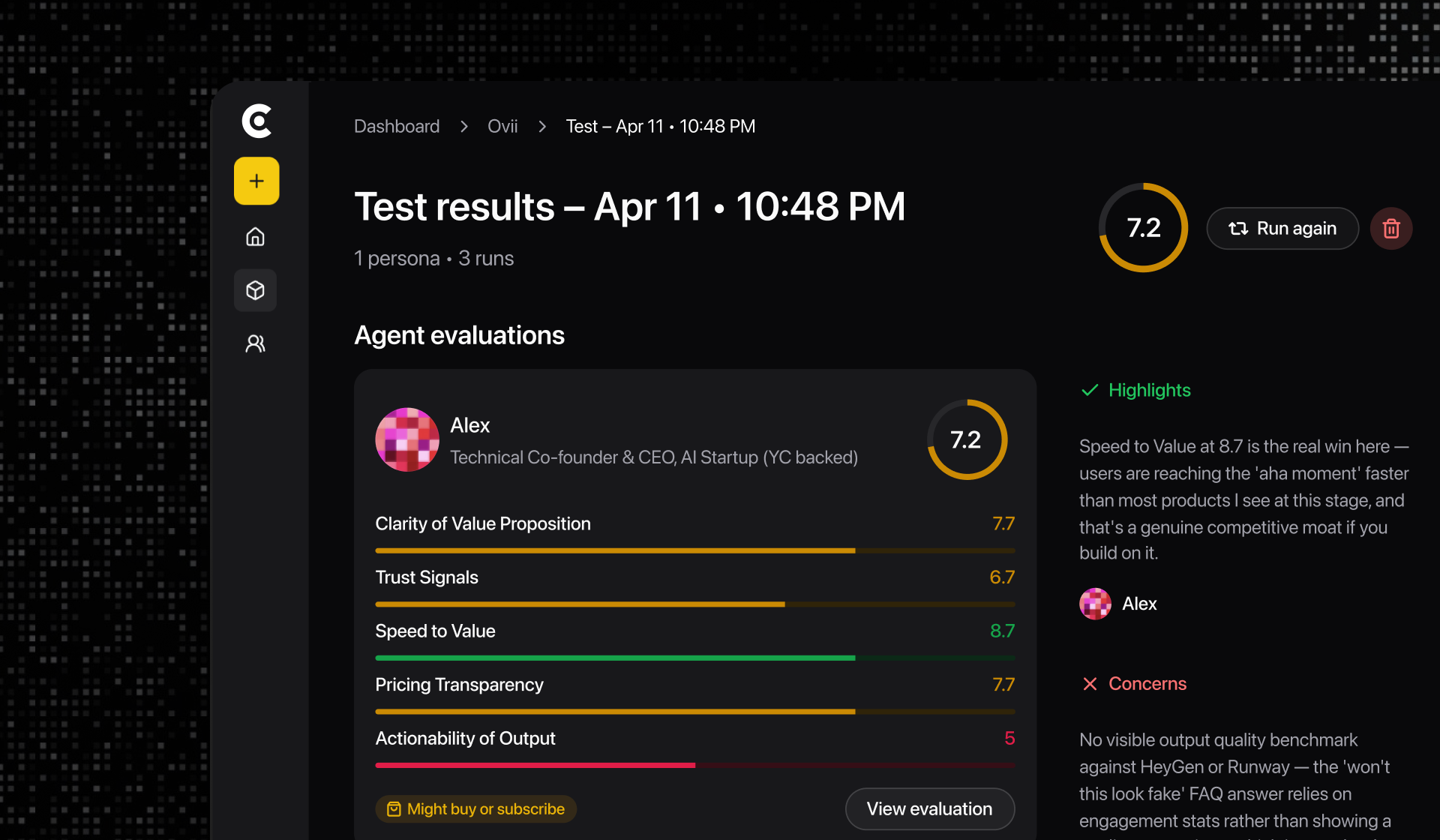
Most founders give you a market, not an ICP.
"We're building for care agencies." "Designers who code." "Privately owned marinas." Those are categories. They're a useful first cut at the world, but they're not customers. A category can't say yes to your product. A category can't churn. A category doesn't have a Tuesday afternoon where something breaks badly enough that they go looking for a solution.
That last part is the piece almost every founder leaves out. An ICP isn't a description of a person. It's a description of a person in a specific situation. Drop the situation and you've written a buyer persona. Drop the person and you've written a target market. Keep both and you have something you can actually use.
The two parts
Here's the working definition I use with builders who haven't thought about this carefully: an ICP is the specific kind of person who, in a specific situation, will say yes to your product fastest and stay the longest.
Two halves: who they are, and when they need you.
A care agency with under 10 employees is who. The forcing function is when: they've had clients churn because caregivers don't show up and they can't schedule a substitute fast enough. Together, those two things tell you whether to build, what to build, and who to ignore. Either one alone tells you almost nothing.
The "when" is what most founders skip. People don't try your product when they want to. They try it when something forces them to. Knowing the trigger is what separates an ICP that's decorative from one that's operational.
ICP, persona, target market
These three terms get used interchangeably and they shouldn't, because they do different jobs.
Target market is a category. It sizes the opportunity. When you're talking to an investor about TAM, this is the version you're pulling on.
Buyer persona is a character sketch. It's who you write copy for. When you're writing a hero section or an onboarding email and you need to imagine the person reading it, this is the version you're pulling on.
ICP is a hypothesis about which slice of the market converts and retains. It's who you build for and, more importantly, who you ignore.
The distinctions matter because each one does its job differently. Most founders collapse all three into a single fuzzy paragraph and lose the value of each. Then they wonder why their copy doesn't convert, their roadmap doesn't focus, and their investor pitch doesn't size.
What to write down
Six things. If your ICP doc doesn't answer all six, it's decorative. If it does, you can use it to write a hero section, prioritize a roadmap, and disqualify a sales call.
- Who they are by role and context. Not just job title. Company size, stage, what their day looks like.
- What they're trying to get done. The job, in their language, not yours.
- What they've already tried that didn't work. This is where you find the real positioning.
- What specifically triggers them to look for a solution. The forcing function. The "Tuesday afternoon" moment.
- What they care about when they evaluate one. This becomes your eval criteria, your hero copy, your trust signals.
- What would make them walk away. Because shipping a paid signup in month one is meaningless if they churn in month two.
A worked example. Crew's ICP, as we currently model it:
- Who: a solo or two-person team building an AI-native software product. Usually a designer-builder or a technical founder shipping with Cursor, Lovable, Bolt, or v0. Pre-PMF or at the edge of it.
- Trying to get done: validate that what they've built actually lands with the customer they think they're building for, before they pour months of effort or marketing budget into it.
- Already tried: friends-and-family feedback (biased, vague), Twitter polls (their followers aren't their ICP), traditional user testing platforms (slow, expensive, the recruiting alone takes a week).
- Trigger: they're about to launch (Show HN, Product Hunt, a paid campaign) and they want signal before the launch instead of after.
- Cares about when evaluating: speed (results in minutes, not weeks), specificity (feedback against their actual ICP, not a generic panel), and craft (they can tell when something is built for them vs. built for someone else).
- Walks away if: the feedback feels generic, the AI personas feel like cardboard cutouts, or the price-to-value ratio doesn't match what a few hours with a sharp friend would have produced.
That's the version we use to make decisions. It's also the version that gets sharper every week as more builders run evals and we learn which ones convert and which ones don't.
How founders get this wrong
Four patterns, in roughly increasing order of damage.
Writing the ICP they wish they had. Usually because the bigger version of the ICP is more investable. The pitch deck wants a billion-dollar market, so the ICP gets stretched until it covers one. Fine for the deck, ruinous for the product. You can't build for the ICP you wish you had; you can only build for the one that actually converts.
Making it too broad. Even an ICP that disqualifies some people can still be too broad to be useful. We learned this the hard way at Tortuga. We built four products (Quartermaster, Flagship, Ovii, Captain) and tried to sell them as a go-to-market bundle for AI builders. The problem wasn't the products. The problem was that each of them had a different ICP with a different trigger and a different switching cost. They couldn't share an ICP because the moment that pulled someone toward Quartermaster was nothing like the moment that pulled someone toward Ovii. Bundling them forced us to write a fuzzy umbrella ICP that didn't sell any of the four. That recalibration is part of what made us go all in on Crew.
Confusing the buyer with the user. Especially common in B2B, where the person who pays isn't the person who clicks. The buyer cares about ROI, security, and getting fired-proofness. The user cares about whether the thing is annoying to use on a Wednesday at 4pm. If your ICP is the buyer, your product gets bought and unused. If it's only the user, your product gets loved and unpurchased. You usually need both, with one as primary.
Treating it as a one-time exercise. This is the worst of the four, because it disguises itself as conviction. You started with a clear picture of your ideal customer. You built for them. You believe in them. And meanwhile, the 20% of users who actually love your product look nothing like the picture, and you keep ignoring them because you're sure the other 80% is coming around. They're not. It's rigidity dressed as conviction. The first startup I worked at got hurt badly by this. The founder was certain about the ideal user and made every decision through that lens, and the decisions weren't rooted in the reality of who was actually showing up.
The honest version of an ICP is a working hypothesis. It updates with every customer conversation. The goal isn't to be right at the start. The goal is to find the pattern faster than your competitors and then double down on the slice that converts and stays.
What if you don't have any customers yet?
This is the question we hear most from AI builders, and it's a fair one. How are you supposed to define an ideal customer if you've never had one?
You start with a hypothesis. Not a wish, not a TAM-sized fantasy, but a real hypothesis grounded in the specific problem you're solving and the specific kind of person who has it most acutely. You write down all six pieces above with your best honest guess. You ship. Then you let the first ten conversations sharpen it.
This is part of why Crew exists. If you can pressure-test your ICP and your positioning against AI personas before you have human customers, you have a better starting hypothesis when the human customers show up. And once they do, you build the in-product ICP around the people who actually said yes, not the ones you thought would.
The vague version of an ICP makes every decision feel plausible, which means every decision is hard. The sharp version makes most decisions automatic. Worth the work to find it.